


Toyota Plug-in Hybrid Guide: Prius Plug-in Hybrid vs. RAV4 Plug-in Hybrid in North Kingstown, RI
The Toyota Prius Plug-in Hybrid is the efficiency-first choice, while the Toyota RAV4 Plug-in Hybrid is the SUV-space-and-AWD choice. Both let you drive on electric power when charged and continue with gas-electric hybrid operation when the battery runs low, giving Rhode Island drivers a flexible bridge between a traditional hybrid and a fully electric vehicle.
For shoppers comparing the 2026 Toyota Prius Plug-in Hybrid and 2026 Toyota RAV4 Plug-in Hybrid at Nucar Toyota of North Kingstown, the best answer depends on how you drive. If your days are mostly commuting, errands, and easy parking, Prius Plug-in Hybrid has the edge. If you need more room, standard AWD, stronger acceleration, and family-ready versatility, RAV4 Plug-in Hybrid is likely the better fit.
Prius Plug-in Hybrid vs. RAV4 Plug-in Hybrid: The Quick Answer
| Category | 2026 Toyota Prius Plug-in Hybrid | 2026 Toyota RAV4 Plug-in Hybrid |
| Best fit | Efficiency-focused commuters and smaller households | Families, SUV shoppers, and drivers who want AWD |
| Body style | Sleek compact hatchback | Compact SUV |
| All-electric range | Up to EPA-estimated 44 miles | EPA-estimated 54 miles on SE |
| Horsepower | 220 net-combined horsepower | 324 net-combined horsepower |
| Drivetrain | Front-wheel drive | Standard AWD |
| Charging | Standard household outlet or Level 2 charging under ideal conditions | Charging equipment varies by grade, with DC fast-charging capability on XSE and Woodland |
| Towing | Not the focus of the vehicle | Up to 3,500 pounds on Woodland, SE, and XSE when properly equipped |
| Local use case | Commuting, errands, and efficient daily driving | Family travel, cargo, AWD confidence, and weekend plans |
What Is a Toyota Plug-in Hybrid?
A Toyota plug-in hybrid electric vehicle, often called a PHEV, uses a gas engine, electric motors, and a larger battery that can be charged from an outside power source. With enough battery charge, a plug-in hybrid can drive on electric power for many everyday trips. When the charge runs low, it can continue driving with hybrid operation.
That flexibility is the big advantage. You can plug in overnight, use electric driving for quick runs to Allie’s Donuts or errands around South County, then take a longer trip without planning every stop around a charger.
A plug-in hybrid rewards regular charging, but it does not require the same lifestyle change as a fully electric vehicle. That makes Prius Plug-in Hybrid and RAV4 Plug-in Hybrid especially appealing for drivers who want more electric miles but still like the backup of a gasoline engine.
Choose the Prius Plug-in Hybrid If Efficiency Is Your Top Priority
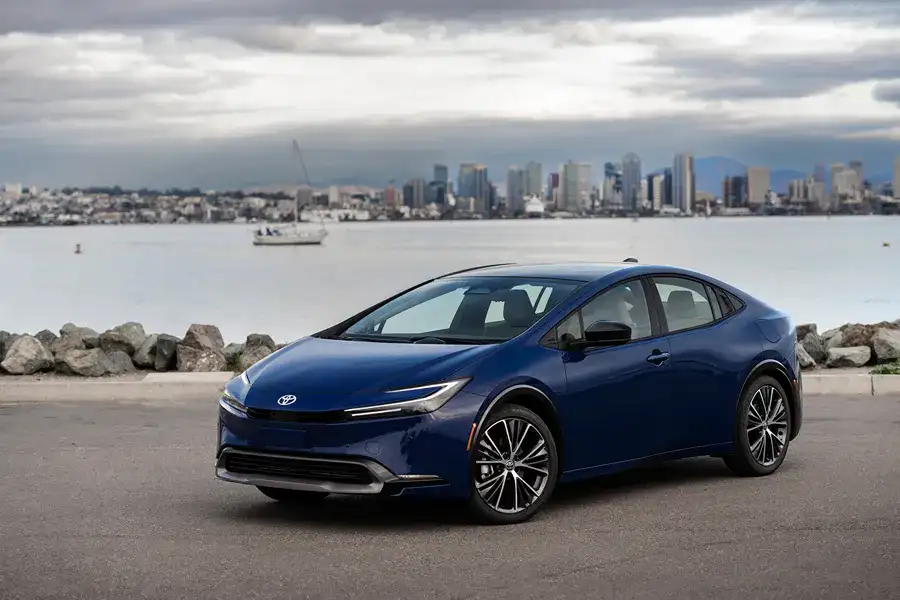
The 2026 Toyota Prius Plug-in Hybrid is the better match if you want the most efficiency-focused Toyota plug-in hybrid. It offers up to an EPA-estimated 44-mile all-electric driving range rating, up to an estimated 127 MPGe combined rating, and 220 net-combined horsepower.¹
That mix makes Prius Plug-in Hybrid more than a fuel-saver. It feels responsive, looks modern, and gives drivers a practical hatchback shape without stepping up to an SUV. For daily commutes to Wickford Junction, quick parking near local shops, or regular drives along Route 1, its compact size and electric range can make everyday driving feel easier.
The Prius Plug-in Hybrid is a strong fit if you:
- Want the highest-efficiency Toyota plug-in hybrid option
- Usually drive alone, with one passenger, or with a smaller household
- Prefer a lower, sleeker vehicle
- Want easy parking and strong commuter value
- Can charge at home most nights
- Do not need SUV cargo space or AWD
Prius Plug-in Hybrid also makes sense for shoppers who are EV-curious but not ready for a fully electric vehicle. You get meaningful electric driving range, but the gas engine is still there when your day changes.
Choose the RAV4 Plug-in Hybrid If You Need SUV Space and AWD
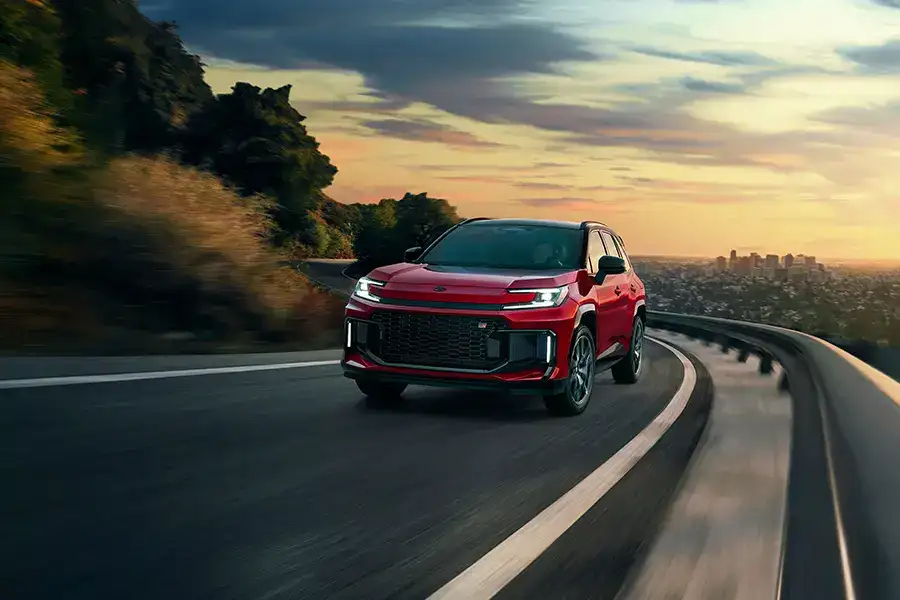
The 2026 Toyota RAV4 Plug-in Hybrid is the stronger choice if you want plug-in efficiency with more room, more power, and standard AWD. Toyota lists it with 324 net-combined horsepower and an EPA-estimated 54-mile all-electric range rating on the SE grade.²
RAV4 Plug-in Hybrid also brings the everyday advantages that make the RAV4 name so popular: an SUV seating position, flexible cargo space, confident traction, and easier loading for family gear. It is the better match for drivers whose week includes school routines, grocery trips, sports equipment, pets, beach bags, or longer drives across Rhode Island.
The RAV4 Plug-in Hybrid is a strong fit if you:
- Want standard AWD
- Need more passenger and cargo flexibility
- Prefer the height and visibility of an SUV
- Want stronger acceleration
- Plan to carry family gear, pets, or outdoor equipment
- Want light towing capability when properly equipped
- Need one vehicle for commuting, family life, and weekend travel
For local roads like Boston Neck Road, Ten Rod Road, and Route 1, the RAV4 Plug-in Hybrid gives you the plug-in advantage without asking you to give up SUV usefulness.
Do You Have to Charge a Toyota Plug-in Hybrid?
You do not have to charge a Toyota plug-in hybrid to drive it, but regular charging is how you get the most value from it. When the battery has charge, Prius Plug-in Hybrid and RAV4 Plug-in Hybrid can use electric power for many daily trips. When the battery charge is depleted, the vehicle can continue with hybrid operation.
That distinction matters. A plug-in hybrid is not stranded when you forget to plug in. It simply works more like a regular hybrid until you recharge the battery.
Toyota says the Prius Plug-in Hybrid can be charged with the supplied dual-voltage cable using a standard 120V household outlet or a Level 2 charger under ideal conditions. Toyota estimates about 11 hours for a full charge on a 120V outlet and about 4 hours with Level 2 charging under ideal conditions. Toyota also notes that if the Prius Plug-in Hybrid is not plugged in, it can continue to run like an efficient hybrid.³
For many North Kingstown drivers, the easiest routine is simple: plug in at home overnight, use electric driving during the day, and let the hybrid system handle longer trips.
RAV4 Plug-in Hybrid Charging Varies by Trim
The 2026 RAV4 Plug-in Hybrid adds an important detail shoppers should know: charging equipment varies by grade.
Toyota says the RAV4 Plug-in Hybrid XSE and Woodland grades have an 11-kW onboard AC charger with a CCS1 charging port and DC fast-charging capability. Under ideal conditions, Toyota estimates DC fast charging from 10% to 80% in about 30 minutes. The SE and GR SPORT Plug-in Hybrid models have a 7-kW onboard charger with a J1772 charging port for Level 1 and Level 2 charging, with Toyota estimating Level 2 charging from 10% to 80% in around 4 hours under ideal conditions.⁴
That makes trim selection especially important. If faster public charging is a priority, the XSE and Woodland grades deserve a closer look. If your plan is mostly home charging and daily local driving, the SE or GR SPORT may still fit well depending on your feature preferences.
Prius Prime and RAV4 Prime: What Happened to the Names?
Shoppers may still search for “Prius Prime” or “RAV4 Prime,” and that is understandable. Toyota used the Prime name for earlier plug-in hybrid versions of Prius and RAV4. For the 2025 model year, Toyota changed the RAV4 Prime name to RAV4 Plug-in Hybrid, and the same naming approach now applies across Toyota’s current plug-in hybrid language.⁵
The important takeaway is simple: if you are shopping for a new Toyota Prius Prime or RAV4 Prime, the current Toyota names to look for are Prius Plug-in Hybrid and RAV4 Plug-in Hybrid.
Which Toyota Plug-in Hybrid Is Better for Commuting?
The Prius Plug-in Hybrid is usually the better commuter choice if efficiency, parking ease, and lower daily energy use are the biggest priorities. Its compact footprint works well for train-station routines, office parking lots, and daily drives where you are not carrying much cargo.
The RAV4 Plug-in Hybrid is the better commuter choice if your vehicle also has to handle family duty, winter weather, or weekend cargo. Standard AWD and SUV flexibility give it a broader skill set, especially if your commute is only one part of what the vehicle needs to do.
Which Toyota Plug-in Hybrid Is Better for Families?
The RAV4 Plug-in Hybrid is the stronger family pick for most households. Its SUV layout gives you more flexibility for passengers, groceries, strollers, school bags, sports gear, and road-trip cargo.
The Prius Plug-in Hybrid can still work well for couples, smaller families, or drivers who travel light. Its hatchback design gives it useful cargo access, but its main strengths are efficiency, easy driving, and plug-in commuter value rather than family-SUV versatility.
Which Toyota Plug-in Hybrid Is Better for Road Trips?
The RAV4 Plug-in Hybrid has the advantage for road trips when you need room for people and gear. It is the more natural choice for weekend drives to Goddard Memorial State Park, longer New England travel, or family outings where cargo space matters.
The Prius Plug-in Hybrid is still a smart long-distance choice for efficiency-minded drivers. Once the available electric range is used, it can continue operating as a hybrid, so you do not have to plan the whole trip around charging stops.
A simple way to decide: travel light and prioritize efficiency, choose Prius Plug-in Hybrid. Bring passengers, gear, and weekend equipment, choose RAV4 Plug-in Hybrid.
When a Regular Toyota Hybrid May Be the Better Choice
A plug-in hybrid is not automatically the best Toyota electrified choice for every driver. A regular Toyota Hybrid may make more sense if you do not have reliable charging access, drive unpredictable long distances every day, or simply want hybrid efficiency without plugging in.
Toyota offers several hybrid options beyond its plug-in hybrid models, including Camry, Corolla Hybrid, RAV4 Hybrid, Highlander Hybrid, Grand Highlander Hybrid, Sienna, Crown Signia, and more. A plug-in hybrid is best when you can charge regularly. A standard hybrid is best when you want efficiency with no charging routine at all.
The Simple Decision
Choose the Toyota Prius Plug-in Hybrid if you want a sleek, efficient plug-in Toyota for commuting, local errands, and smaller-household driving.
Choose the Toyota RAV4 Plug-in Hybrid if you want plug-in efficiency with SUV room, standard AWD, stronger capability, and more flexibility for family life or weekend travel.
Both models give Rhode Island drivers a practical way to use more electric power without losing the gas-engine backup that makes longer drives easy.
Toyota Plug-in Hybrid FAQ
What is the difference between the Prius Plug-in Hybrid and RAV4 Plug-in Hybrid?
The Prius Plug-in Hybrid is a compact hatchback focused on efficiency, easy parking, and commuter-friendly electric driving. The RAV4 Plug-in Hybrid is a compact SUV with standard AWD, more cargo flexibility, more horsepower, and available towing capability when properly equipped.
Does the Toyota Prius Plug-in Hybrid need to be plugged in?
No. Toyota says the Prius Plug-in Hybrid can continue to run like an efficient hybrid if it is not plugged in. Plugging in regularly helps you make better use of its all-electric driving capability.³
Does the Toyota RAV4 Plug-in Hybrid need to be plugged in?
The RAV4 Plug-in Hybrid is built to take advantage of external charging, but it also includes a gas-electric hybrid system for driving beyond its available electric range. Regular charging is the best way to maximize the plug-in benefit.
Which Toyota plug-in hybrid has AWD?
The 2026 Toyota RAV4 Plug-in Hybrid comes with standard AWD. The 2026 Toyota Prius Plug-in Hybrid is the more efficiency-focused hatchback choice.
Which Toyota plug-in hybrid is better for families?
The RAV4 Plug-in Hybrid is usually better for families because it offers SUV space, standard AWD, and more cargo flexibility. The Prius Plug-in Hybrid is better for commuters, couples, and smaller households that prioritize efficiency.
Can the RAV4 Plug-in Hybrid tow?
Yes. Toyota lists up to 3,500 pounds of towing capacity for the 2026 RAV4 Plug-in Hybrid Woodland, SE, and XSE grades when properly equipped.²
Is a plug-in hybrid better than a regular hybrid?
A plug-in hybrid may be better if you can charge regularly and want to complete many short trips using electric power. A regular hybrid may be better if you do not want to plug in or do not have easy access to charging.
Shop Toyota Plug-in Hybrid Vehicles in North Kingstown
Nucar Toyota of North Kingstown can help you compare Toyota plug-in hybrid models, review charging basics, and decide whether a Prius Plug-in Hybrid, RAV4 Plug-in Hybrid, or standard Toyota Hybrid fits your routine best.
Start by browsing our new Toyota inventory, explore Toyota electrified vehicles, value your trade, or visit us at 3671 Quaker Ln in North Kingstown. With helpful Toyota hybrid guidance and a team ready to make the shopping process easier, it is easy to see why Everyone loves a Nucar!
Sources
¹ Toyota lists the 2026 Prius Plug-in Hybrid with up to an EPA-estimated 44-mile all-electric driving range rating, 220 horsepower, up to an estimated 127 MPGe combined rating, and SE, XSE, Nightshade Edition, and XSE Premium grades. (Toyota)
² Toyota lists the 2026 RAV4 Plug-in Hybrid with 324 net-combined horsepower, an EPA-estimated 54-mile all-electric range rating on SE, standard AWD, SE/Woodland/XSE/GR SPORT grades, and an available 3,500-pound towing capacity on Woodland, SE, and XSE when properly equipped. (Toyota)
³ Toyota says the Prius Plug-in Hybrid can charge from a standard 120V household outlet or Level 2 charger using the supplied dual-voltage cable under ideal conditions, and that it can continue running like an efficient hybrid if it is not plugged in. (Toyota USA Newsroom)
⁴ Toyota says the 2026 RAV4 Plug-in Hybrid XSE and Woodland grades have an 11-kW onboard AC charger with CCS1 and DC fast-charging capability, while SE and GR SPORT grades have a 7-kW onboard charger with J1772 for Level 1 and Level 2 charging. (Toyota USA Newsroom)
⁵ Toyota’s official 2025 RAV4 Plug-in Hybrid announcement described the move from the RAV4 Prime name to RAV4 Plug-in Hybrid. (Toyota USA Newsroom)
0 comment(s) so far on Toyota Plug-in Hybrid Guide: Prius Plug-in Hybrid vs. RAV4 Plug-in Hybrid in North Kingstown, RI